
Category: Bussiness

  • How I wrote a post about AI using AI

    How I wrote a post about AI using AI

    It’s becoming ever-so-popular that people of all ages use some form of artificial intelligence in their daily routines. Exploring new playlists before jogging, reviewing suggestions from your favorite streaming service, or completing phrases when writing an email. Artificial intelligence has more than a cameo in our lives.

    Though some fear change and find it difficult to adapt, the great majority of device users are embracing the transition to automation. Generative AI, for example, has become the spearhead of this process and a pivotal inflection point. The media, marketers, students, temps, and even C-Suite-Level players are now high on AI.
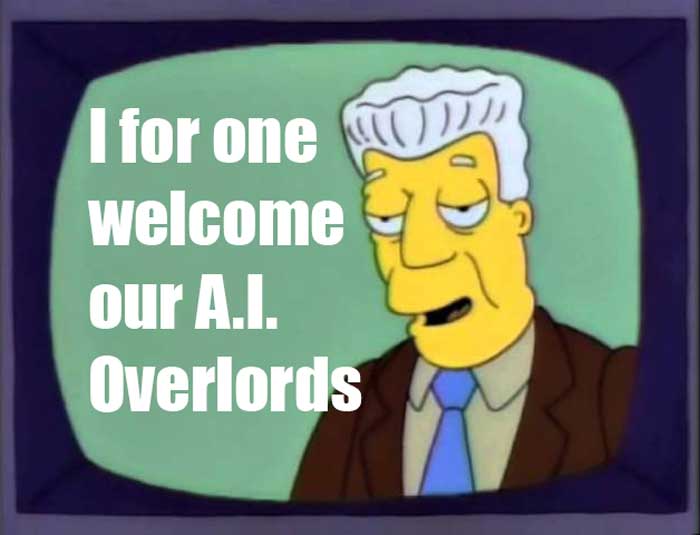
    Even so, many have been open and verbal about the downfall of creativity and the ethics behind a teachable software tool. We feed the information that it ultimately uses, and we learn from what it shows us. Like the late Mitch Hedberg once said: “My belt holds my pants up, but the belt loops hold my belt up. I don’t really know what’s happening down there. Who is the real hero?”

    However, some fail to either use the available tools to their advantage and perfection of their skills or use it in a way that displays an innate lack of clarity, organization, and diligence. It’s not uncommon that you hear professionals and thought leaders utter the phrase “That looks like it was made by AI…”. And it’s sad because it’s true.

    28 minutes before I started to write this post, I thought it would be interesting to create a not-so-elaborate piece delving into what is generative AI.

    I decided to utilize ChatGPT because it is to generative AI what Kleenex is to disposable tissues. Many people have heard of it, and I figured that it would be the most familiar tool to use for this exercise.

    This is the prompt I used:

    First, I gave it context of where the communication was going to come from.

    A lot of the process works on scenarios that we feed into the prompt, so context and background is paramount. I also inputted my website URL so that it would scan its content, and I mentioned that I wanted to make a blog post. Remember, this is not a deep prompt like the ones currently used in strategic planning, but more on the side of an illustrative example.

    I gave it a reason for my decision to use it for the purpose of creating a blog post. Then, I was detailing the simple outcome that I needed for this occasion. I also added a style of writing from people who have published online and are known by enough people to extract their style. If you tell AI to write in the style of a celebrity or thought leader, it will present the outputs in a similar way.

    Then I gave it a measurable word count, content that was to be highlighted, and a focus. Never feel afraid to tell the platform what to do; that’s its purpose.

    Finally, I asked “Does that make sense? Do you need any other direction?” which is something that one of my colleagues and partner, Nader Safinya, does when he’s prompting his Generative AI tools.

    After all of what I mentioned previously, ChatGPT generated a post which I made no changes to, and then copied, and pasted on my blog post. I then went to the Pexels website and downloaded an image to be featured when sharing the link. After 11 minutes, I had a post made by Generative AI made “by itself”. You can read the post by clicking the following link: Generative AI: The Creative Revolution Marketers Can’t Afford to Ignore.

    I feel that I need to add that this took longer than what many usually dedicate to when creating posts. I think that the main reason that we now see such a large amount of content that has emojis, similar tone, and structure is because it’s easier for some to just poke it with a stick and ask it to create something. There is no judgement from me; anyone can use the tools how they see fit. But this is, in my opinion, a practice that should be avoided at all costs in the future if you wish to improve your skills and teach the machines how to become better allies to your business.

    My colleagues and I usually dedicate days to producing content because we focus on how the strategy is going to be composed, what the result should be, and by using the amalgamate of resources we are able to collect. I believe that those who wield the power of analytical thinking together with strategic planning and creativity, will harness results that could not have been achieved as fast as our current times allow us.

    We are now fully committed to implementing the use of AI into sections of our processes and combining them with our strategic creative thinking. Set up a discovery call to find out how we can furnish something that fits your needs.


  • Generative AI: The Creative Revolution Marketers Can’t Afford to Ignore

    Generative AI: The Creative Revolution Marketers Can’t Afford to Ignore

    In the last few years, a fascinating phenomenon has quietly reshaped how brands connect with their audiences. Enter Generative AI—a game-changing technology that feels as groundbreaking as the invention of the printing press but far more versatile. For marketers, it’s like handing a team of brilliant creatives a never-ending supply of coffee and inspiration—only the “team” in this case is a machine.

    If you’ve heard the buzz but haven’t cracked the code on how this works—or more importantly, how it’s being used to deliver campaigns that win hearts, minds, and industry accolades—this is the post for you.


    What Is Generative AI?

    At its core, Generative AI refers to systems capable of creating original content—text, images, videos, even music—based on patterns they’ve learned from data. Think of it as an algorithmic apprentice, trained by devouring vast amounts of material (think billions of pages, pictures, and sounds), and using that knowledge to create something new, tailored to specific prompts.

    The magic lies in its ability to understand the subtleties of human creativity. Unlike traditional automation, which replicates predictable patterns, Generative AI mimics imagination. It doesn’t just analyze past campaigns—it can dream up entirely new ones, tailored to a brand’s unique identity and audience preferences.


    A Quick History of Generative AI

    Generative AI didn’t appear overnight. Its journey began decades ago, rooted in advancements in machine learning and neural networks. The real breakthrough came with technologies like GPT (Generative Pre-trained Transformer) and GANs (Generative Adversarial Networks).

    • GPT: Initially designed for generating coherent, human-like text, GPT became a cultural milestone by enabling tools like ChatGPT to write essays, code, and everything in between.
    • GANs: Behind those hyper-realistic images you see? GANs pit two neural networks against each other—one creating content and the other critiquing it until the output feels authentic.

    These technologies evolved alongside an explosion of accessible computing power, making it feasible for companies of all sizes—not just tech giants—to leverage their potential.


    Why Marketers Are Betting Big on Generative AI

    In an industry driven by fresh ideas and fast turnarounds, marketers quickly saw the potential for Generative AI to supercharge creativity and efficiency. Here’s how the savviest players are using it today:

    1. Content Personalization at Scale
      Imagine creating hyper-targeted ad campaigns that resonate deeply with every segment of your audience—without hiring an army of creatives. Generative AI can craft headlines, visuals, and even video scripts that adapt dynamically based on user preferences or behaviors.
    2. Brainstorming with Boundaries
      AI isn’t a replacement for human creativity—it’s a collaborator. Teams use it to generate dozens of concepts in minutes, sparking discussions and pushing boundaries without getting stuck in creative ruts.
    3. Streamlining Production
      From generating realistic product mockups to drafting polished blog posts (yes, like this one), Generative AI helps marketers spend less time on grunt work and more on strategy.
    4. Elevating Storytelling
      Award-winning campaigns are built on compelling narratives. AI tools can analyze audience insights and cultural trends to co-create stories that feel relevant and authentic.

    Responsible AI: The Key to Sustainable Success

    Of course, this shiny new tool comes with its share of challenges. As marketers, we have a responsibility to use Generative AI ethically and transparently. Here’s what that looks like:

    • Guarding Authenticity: AI can amplify creativity, but human oversight ensures the output aligns with the brand’s voice and values.
    • Avoiding Bias: Since AI learns from historical data, it can inadvertently perpetuate biases. Responsible marketers actively audit and refine outputs to ensure inclusivity.
    • Respecting Privacy: Generative AI thrives on data, but brands must handle personal information with care, adhering to privacy laws and ethical standards.
    • Disclosing Use: Transparency builds trust. Letting audiences know when AI was involved in content creation isn’t just ethical—it can also be a point of pride, showcasing your brand’s innovative edge.

    Looking Ahead

    The best marketers aren’t just early adopters; they’re visionaries who think beyond the current hype. Generative AI isn’t just a tool for the present—it’s a bridge to the future of branding. But like any powerful tool, its impact depends on how you wield it.

    Here at Profile Media, we don’t just follow trends; we anticipate them. Whether it’s helping brands craft a strategy to leverage AI effectively or ensuring your campaigns stay ahead of the curve, we bring the insight and creativity that today’s C-suite decision-makers demand.

    So, the next time you see an ad that feels like it’s speaking directly to your soul, remember: there might just be a touch of AI magic behind it—along with the human genius that made it all possible.

    Get in touch to find out more about how we can incorporate Generative AI into your strategy.

  • Bring Back Brilliant Business Branding

    Bring Back Brilliant Business Branding

    This is not a “How-To” post but more of a manifesto. There is a worldwide need to overshadow the competition, excel in every contest, and retain top-of-mind status for as long as possible. But in the battle to become a top brand, we sometimes follow the herds of corporate brands stampeding to implement the latest trends, to use the latest technological advancements, and to drown in research and data.

    If you ever find yourself doom-scrolling yourself to sleep, you might have come across some of those nifty hack videos in which a person performs an action that provides a simple solution to an undetected problem. Like the one about rubbing soap on your glasses and buffing them with a cloth to prevent them from becoming foggy, or adding a teaspoon of baking soda to the water when boiling the eggs to peel them faster. Those quick “A-ha!” moments are becoming lost in a sea of restrictions, community guidelines, data, and generative AI.

    Wouldn’t it be a beautiful experience if the marketing industry could hone that feeling and embed it into every campaign, ad, post, and other brand communication output?

    I have never been one to stand against progress, nor am I an individual who statues in the past. If anything, I grow more aware every day. It is this notion and perspective that allows me to vividly notice an inflection point where I need to stop and carve a reminder in the bark of the internet. We have Yin-Yanned our automation and human nature so much that true creativity has spun out of the cycle. We see this in movies, music, and many creative art forms. There is simply no room for originality or risk anymore in corporate marketing.

    The fruit of a beautiful idea, juiced to the point of fading away as disinterested mobs of people redirect attention to the next set of bells and whistles.

    With all the technological advancements, experience, and data we’ve amassed over centuries of mankind’s history, with all the knowledge available, are we running low on our ability to produce original creative content that truly breaks paradigms and sets a “Before and after” within industries? I think not, and I’ll tell you why.

    While the innovation ivy hasn’t climbed its way to the top of the movie and musical industries, it is certainly spreading its roots in the fields of strategic branding, design thinking, and guerrilla marketing. We are now able to reach advertising, branding, and marketing goals in a fraction of the time it took 20 years ago, though not necessarily at a lower cost. It does mean, that the outcomes are becoming more predictable. The launches are calculated to the tee, and creative content is curated and nourished before being sent off.

    What comes next is entirely up to you, the reader.

    This point in time will serve as a milestone for others to revisit in five, fifteen, or even a hundred years from now. As more creators emerge every day with the help of AI, a desperate need to stand out looms over every new production. How we differentiate ourselves, is the geode that we must learn how to find.

    A good strategist never stops asking questions. The right questions will find out what’s making your engine stop.

    Humans have been drawing gasps and admiration from others from the beginning of time. Each era is a statement of innovation and excitement to witness what comes next. Though we may find it alleviating to delegate everything to machines, never forget that we must remain at the center of progress. Maybe our future will not allow us to be the brains of the machine, but we indisputably must strive to be its heart.

    When searching for the right message for your next campaign, or trying to find a solution to a much larger problem, remember the feeling you get when watching a life-hack video. You may find yourself thinking “Why didn’t I think of that?” but never got around to asking the real questions that would provide solutions to many other things. This is what’s been reported missing in corporate marketing for many years now. Those simple yet elegant pieces make you stop and admire an enlightening thought. Though you can’t cater to everyone’s tastes, you definitely can solve loads of their basic problems.

    I encourage you to find the beauty of extracting simple solutions from the depths of impediments. Implement those simple solutions to your brand promise. Help your customers reach that “A-ha!” moment when you make their lives easier.

    Strategic planning is the pre-requisite of all great campaigns. We have been amassing large amounts of knowledge and experience over the years and are now still managing to learn and grow each passing day. Shouldn’t your brand have a right to plan its growth?

    If you’re ready to make a noticeable change to quench your thirst for success, start working with us. Send us an email to contact@profilemedia.co or schedule a discovery call to find out how you can Bring Back Brilliant Business Branding.

    TL;DR : We can help you plan your branding and marketing strategy through a sophisticated and empathic process.