It’s becoming ever-so-popular that people of all ages use some form of artificial intelligence in their daily routines. Exploring new playlists before jogging, reviewing suggestions from your favorite streaming service, or completing phrases when writing an email. Artificial intelligence has more than a cameo in our lives.
Though some fear change and find it difficult to adapt, the great majority of device users are embracing the transition to automation. Generative AI, for example, has become the spearhead of this process and a pivotal inflection point. The media, marketers, students, temps, and even C-Suite-Level players are now high on AI.

Even so, many have been open and verbal about the downfall of creativity and the ethics behind a teachable software tool. We feed the information that it ultimately uses, and we learn from what it shows us. Like the late Mitch Hedberg once said: “My belt holds my pants up, but the belt loops hold my belt up. I don’t really know what’s happening down there. Who is the real hero?”
However, some fail to either use the available tools to their advantage and perfection of their skills or use it in a way that displays an innate lack of clarity, organization, and diligence. It’s not uncommon that you hear professionals and thought leaders utter the phrase “That looks like it was made by AI…”. And it’s sad because it’s true.
28 minutes before I started to write this post, I thought it would be interesting to create a not-so-elaborate piece delving into what is generative AI.
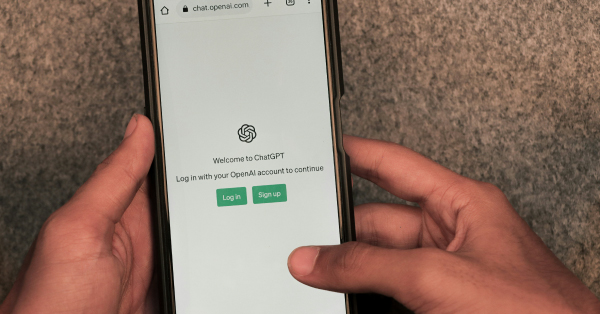
I decided to utilize ChatGPT because it is to generative AI what Kleenex is to disposable tissues. Many people have heard of it, and I figured that it would be the most familiar tool to use for this exercise.
This is the prompt I used:
“Hello ChatGPT! I hope your team is doing well. I need your help in creating a blog post for my company Blog. My brand is Profile Media, and my website is https://profilemedia.co
ChatGPT is famous around the world for becoming the main reference point when it comes to generative AI, so I figured that you should be the one to write a post.I’m going to be sharing this on my brand’s LinkedIn page, and I want to target C-suite readers, marketing directors, and decision-makers in companies.
I want to generate trust in my audiences, so they request my strategic branding and marketing services, so I want the post to be knowledgeable but spoken in layman’s terms. My style of writing has been compared to that of Seth Godin and David Foster Wallace.
Please write a Blog post averaging 1,000 words that explains what Generative AI is, how it was developed, and how marketers are using it to responsibly create award-winning campaigns. Does that make sense? Do you need any other direction?”
First, I gave it context of where the communication was going to come from.
A lot of the process works on scenarios that we feed into the prompt, so context and background is paramount. I also inputted my website URL so that it would scan its content, and I mentioned that I wanted to make a blog post. Remember, this is not a deep prompt like the ones currently used in strategic planning, but more on the side of an illustrative example.
I gave it a reason for my decision to use it for the purpose of creating a blog post. Then, I was detailing the simple outcome that I needed for this occasion. I also added a style of writing from people who have published online and are known by enough people to extract their style. If you tell AI to write in the style of a celebrity or thought leader, it will present the outputs in a similar way.
Then I gave it a measurable word count, content that was to be highlighted, and a focus. Never feel afraid to tell the platform what to do; that’s its purpose.
Finally, I asked “Does that make sense? Do you need any other direction?” which is something that one of my colleagues and partner, Nader Safinya, does when he’s prompting his Generative AI tools.
After all of what I mentioned previously, ChatGPT generated a post which I made no changes to, and then copied, and pasted on my blog post. I then went to the Pexels website and downloaded an image to be featured when sharing the link. After 11 minutes, I had a post made by Generative AI made “by itself”. You can read the post by clicking the following link: Generative AI: The Creative Revolution Marketers Can’t Afford to Ignore.
I feel that I need to add that this took longer than what many usually dedicate to when creating posts. I think that the main reason that we now see such a large amount of content that has emojis, similar tone, and structure is because it’s easier for some to just poke it with a stick and ask it to create something. There is no judgement from me; anyone can use the tools how they see fit. But this is, in my opinion, a practice that should be avoided at all costs in the future if you wish to improve your skills and teach the machines how to become better allies to your business.
My colleagues and I usually dedicate days to producing content because we focus on how the strategy is going to be composed, what the result should be, and by using the amalgamate of resources we are able to collect. I believe that those who wield the power of analytical thinking together with strategic planning and creativity, will harness results that could not have been achieved as fast as our current times allow us.
We are now fully committed to implementing the use of AI into sections of our processes and combining them with our strategic creative thinking. Set up a discovery call to find out how we can furnish something that fits your needs.